After 40 years of blindness, injection of light-sensitive protein restores a man’s vision

The first successful clinical test of a technique called optogenetics has allowed a 58-year-old man to see for the first time in decades.

The man was able to see with the help of image-enhancing goggles after 40 years of blindness, thanks to an injection of light-sensitive proteins into his retina.

According to a study published by Nature Medicine on May 24, this is the first successful clinical application of optogenetics, a technique in which flashes of light are used to control gene expression and neuron firing.

The study revealed that the technique is widely used in laboratories to probe neural circuitry and is being investigated as a potential treatment for pain, blindness and brain disorders.

The clinical trial, run by the company GenSight Biologics, based in Paris, enrolls people with retinitis pigmentosa — a degenerative disease that kills off the eye’s photoreceptor cells, which are the first step in the visual pathway.

In a healthy retina, photoreceptors detect light and send electrical signals to retinal ganglion cells, which then transmit the signal to the brain.

GenSight’s optogenetic therapy skips the damaged photoreceptor cells entirely by using a virus to deliver light-sensitive bacterial proteins into the RGCs, allowing them to detect images directly.

GenSight is one of several companies developing optogenetics as a treatment for RP and other disorders of the retina.

In March, Nirenberg’s company Bionic Sight announced that four of the five people with RP it had treated with a similar optogenetic therapy and a virtual-reality headset had recovered some level of vision, although the full trial results have not yet been published.

Also, Swiss pharma giant Novartis is developing a therapy based on a different protein that is so light-sensitive that goggles might not be needed. That therapy has not yet entered clinical trials.

The researchers injected the virus into the eye of a man with RP, then waited four months for protein production by the RGCs to stabilise before testing his vision, the Nature Medicine reported.

José-Alain Sahel, an ophthalmologist at the University of Pittsburgh Medical Center in Pennsylvania and leader of the study, says that one of the challenges was regulating the amount and type of light entering the eye, because a healthy retina uses a variety of cells and light-sensitive proteins to see a wide range of light.

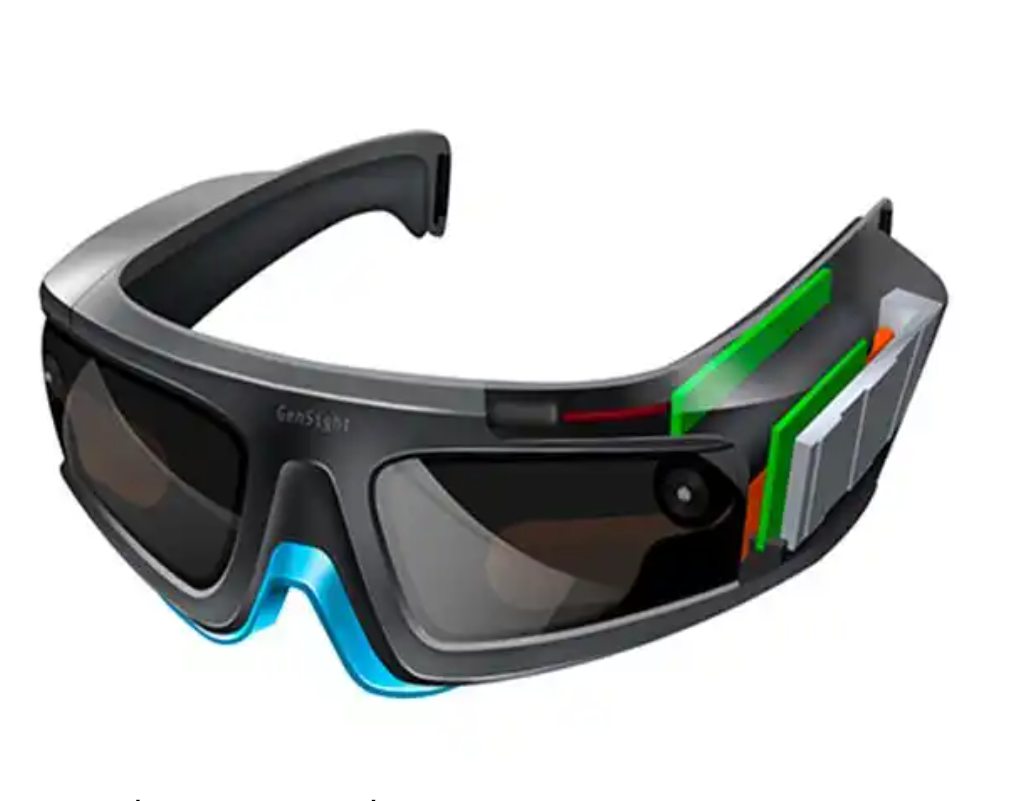
“No protein can replicate what the system can do,” he says. So the researchers engineered a set of goggles that captured the visual information around the man and optimised it for detection by the bacterial proteins.

Using a camera, the goggles analyse changes in contrast and brightness and convert them in real-time into what Sahel describes as a ‘starry sky’ of amber-coloured dots. When the light from these dots enters a person’s eye, it activates the proteins and causes the RGCs to send a signal to the brain, which then resolves these patterns into an image.

The trial participant had to train with the goggles for several months before his brain adjusted to interpret the dots correctly. “He was like an experimentalist, a scientist trying to understand what he was seeing and make sense of it,” Sahel says.

Eventually, he was able to make out high-contrast images, including objects on a table and the white stripes in a crosswalk. When the researchers recorded his brain activity, they found that his visual cortex reacted to the image in the same way as it would have if he had normal sight.

The man still can’t see without the goggles, but Sahel says that he wears them for several hours per day and that his vision has continued to improve in the two years since his injection.

Sahel says six other people were injected with the same light-sensitive proteins last year, but the COVID-19 pandemic delayed their training with the goggles.

A neurobiologist at the University of California, John Flannery says the study “is a big step for the field.

“The most important thing is that it seems to be safe and permanent, which is really encouraging.”

Flannery said while the image may never be as good as natural vision, it is exciting that the brain can interpret images accurately.

Other researchers are, however, calling for more studies.

Sheila Nirenberg, a neuroscientist at Weill Cornell Medical College in New York City says she looks forward to seeing whether the other people in the trial, including some who were injected with higher doses of the protein, have similar results.

“It’s interesting, but it’s an N of 1,” she says.

Karl Deisseroth, a neuroscientist at Stanford University in California who co-developed optogenetics as a lab technique, says the study is important because it is the first time that the technique’s effects have been shown in people.

“It will be interesting to try this with more light-sensitive opsins” that might not require goggles, he says. But he expects optogenetics to be most useful as a research tool that leads to therapies, rather than a therapy itself.

“What we hope to see even more of is optogenetics-guided human and clinical studies,” he says.

How to maintain health eyes

Good vision helps you perform well—at home, at work, or behind the wheel. That’s why it’s important to take a few simple steps to make sure you help keep your eyesight at its best. A regular eye exam is the best way to protect your eyesight – and an easy precaution to take. Here are some tips to help maintain eye health as you age.

Eat a Balanced Diet

fruit vegetablesAs part of your healthy diet, choose foods rich in antioxidants, like Vitamins A and C; foods like leafy, green vegetables and fish.  Many foods – especially fatty fish, such as salmon – contain essential omega-3 fatty acids that are important to the health of the macula, the part of the eye responsible for central vision.

An inadequate intake of antioxidants, consumption of alcohol or saturated fats may create free-radical reactions that can harm the macula – the central part of the retina. High-fat diets can also cause deposits that constrict blood flow in the arteries. The eyes are especially sensitive to this, given the small size of the blood vessels that feed them.

Your eyes are unique, and have their own set of nutritional needs. Ocuvite eye vitamins are specially designed to provide a balanced combination of nutrients dedicated to the health of your eyes.* Visit Ocuvite.com to learn more.

Exercise

Exercise improves blood circulation, which improves oxygen levels to the eyes and the removal of toxins.

Get a good night’s sleep

You’ll feel the difference when you get the sleep you need. You’ll look great, you’ll perform at home or work—and good rest will support the health of your eyes.

Wash your hands

Keeping your hands clean is so important when it comes to your eyes, especially if you’re a contact lens wearer. Before you touch your eye—and before you put in or remove a contact lens—wash your hands with a mild soap and dry with a lint-free towel. Some germs and bacteria that come from your hands can cause eye infections, like bacterial conjunctivitis (pink eye). When you touch your eye, whatever is on your fingers goes right onto your eye’s surface. This is one way that people catch colds—rubbing their eyes while they have cold virus germs on their hands.

Don’t Smoke

Smoking exposes your eyes to high levels of oxidative stress. While the connection has not been clearly identified, it is known that smoking increases your risk for a variety of health conditions affecting the eye. To help you quit, visit the American Lung Association’s free online smoking cessation program – Freedom From Smoking Online – at www.ffsonline.org.

Wear Sunglasses

To protect your eyes from harmful ultraviolet (UV) light, choose sunglasses with both UVA and UVB protection. Also, wearing a hat with a brim will greatly reduce the amount of UV radiation slipping around the side of your sunglasses.

Devices and Blue Light

You’re probably using digital devices for hours each day at work and at home. These devices are exposing your eyes to high energy blue light. It’s called blue light because the wavelengths emitted are near the bluer part of the spectrum. Lutein & Zeaxanthin are eye nutrients that are concentrated in the macula and help eyes filter blue light.* Lutein and Zeaxanthin cannot be produced by our bodies on their own, so they must be obtained through diet and/or supplements. If you don’t think you’re getting enough in your diet, visit Ocuvite.com to learn more. 

Here are some other tips to help when you’re on your computer:

  • Keep your computer screen within 20″-24″ of your eye.
  • Keep the top of your computer screen slightly below eye level.
  • Adjust lighting to minimize glare on the screen.
  • Blink frequently.
  • Take a break every 20 minutes to focus on an object 20 feet away for 20 seconds.
  • Use lubricating eye drops to soothe irritated, dry eyes.

Headaches and your eyes

How a Headache Can Affect Your Eyes and Vision

By Troy Bedinghaus, OD  Medically reviewed by Diana Apetauerova, MD on September 08, 2020

Have you ever had a headache that affected your vision? Sometimes a headache can cause pain around your eyes, even though the headache is not associated with a vision problem. On the other hand, a headache may be a sign that your eyes are changing and that it’s time to schedule an eye exam. Although headaches are rarely a medical emergency, a severe one should not be ignored or minimized.

headaches and vision
Verywell / Luyi Wang

Headaches That Affect Vision

Vision problems can sometimes be the consequence of a headache. This is especially true with migraines and cluster headaches.

Migraine Headache

A migraine headache can cause intense pain in and around your eyes. A migraine aura resembling flashing lights, a prismatic rainbow of lights or a zig-zag pattern of shimmering lights often precedes the actual headache. The aura typically lasts around 20 minutes.

Some people who experience a migraine aura never develop the actual headache, making the diagnosis of the visual disturbances difficult.1 Migraines can also cause tingling or numbness of the skin. People with severe migraines may experience nausea, vomiting, and light sensitivity. Medications, certain foods, smells, loud noises, and bright lights can all trigger a migraine headache.An Overview of Migraine With Aura

Cluster Headache

Cluster headaches are severe headaches that occur in clusters and typically cause pain around the eyes. The pain often radiates down the neck to include the shoulder. Other symptoms include:

Cluster headaches may occur daily for several months at a time followed by a long period with no headaches. It is not known what causes cluster headaches, but they are clearly one of the most severe headaches one can experience.

Vision Problems That Cause Headaches

On the flip side, vision problems can cause headaches when you either overwork the eyes or struggle to maintain focus. By correcting the vision problem, you can often resolve the headache.

Eye Strain

Simply overusing the focusing muscles of your eyes can cause eye strain and headaches. This is an increasing problem in our high tech world

Small-screen texting and web browsing can easily cause eye strain, in part because the words and images on a computer screen are made up of pixels and do not have well-defined edges. The eyes cannot easily focus on pixels, so they must work harder even if an image is in high-resolution.2 When the eye muscles become fatigued, a headache can develop around or behind the eyes.

Farsightedness

Adults and children with uncorrected farsightedness (hypermetropia) will often experience a frontal headache (also known as a “brow ache”). If you are farsighted, you may find it difficult to focus on nearby objects, resulting in eye strain and headaches. As you subconsciously compensate for your farsightedness by focusing harder, the headaches can become worse and more frequent.

Presbyopia

Around the age of 40, people begin to find it difficult to focus on nearby objects. Near point activities, such as reading or threading a needle, are often difficult to perform because of blurring. This is an unavoidable condition known as presbyopia that affects everyone at some point. Headaches develop as you try to compensate for the lack of focusing power. Reading glasses can often relieve the underlying eye strain.

Occupations requiring close-up work, exposure to sunlight for longer periods of time, and farsightedness were the most common risk factors for presbyopia.3Presbyopia: Close-Up Vision Loss and What to Do About It

Giant Cell Arteritis

Also known as temporal arteritis, giant cell arteritis (GCA) is an inflammation of the lining of the arteries that run along the temple. GCA usually creates a headache that causes constant, throbbing pain in the temples. Vision symptoms occur as a result of a loss of blood supply to the optic nerve and retina. Other symptoms include:

  • Fever, fatigue and muscle aches
  • Scalp tenderness
  • Pain while chewing
  • Decreased vision​

GCA is considered a medical emergency. If left untreated, the condition may cause vision loss in one or both eyes. A delayed diagnosis is the most common cause of GCA-associated vision loss.42:18

What Is a Retinal Migraine?

Acute Angle-Closure Glaucoma 

Acute angle-closure glaucoma (AACG) is a rare type of glaucoma that causes a sudden onset of symptoms, including headaches. Eye pressure rises quickly in AACG causing increased eye redness, eye pain, and cloudy vision. A mid-dilated pupil (in which pupil dilation is sluggish and incomplete) is one of the most important diagnostic features of AACG.5

Ocular Ischemic Syndrome

Ocular ischemic syndrome (OIS) is a condition that develops due to a chronic lack of blood flow to the eye. This condition often causes a headache, decreased vision, and a host of other signs, including cataracts, glaucoma, iris neovascularization (the development of new weak blood vessels in the iris), and retinal hemorrhage. White spots on the retina indicate a lack of blood flow and oxygen to the retinal tissue.2:18

What Is a Retinal Migraine?

Herpes Zoster

Also known as shingles, herpes zoster is known for causing headaches, vision changes and severe pain around the head and eye. Herpes zoster is a reactivation of the chickenpox virus and affects a single side of the body. A headache usually precedes an outbreak of painful skin blisters.

Herpes zoster around the eyes is serious and requires immediate medical attention (including antiviral medication) to prevent damage to the ocular nerves and eyes. Complications include corneal clouding, glaucoma, and optic nerve atrophy (deterioration).6

Pseudotumor Cerebri

Pseudotumor cerebri is a condition that occurs when the pressure within the skull increases for no apparent reason. For this reason, pseudotumor cerebri is also referred to as Idiopathic Intracranial hypertension (“idiopathic” meaning of unknown origin and “hypertension” meaning high blood pressure).

Pseudotumor cerebri often causes a headache and changes in vision. If left untreated, pseudotumor cerebri can lead to vision loss as the pressure places strain on the optic nerves. Fortunately, while 65% to 85% of people with pseudotumor cerebri will experience visual impairment, the condition is usually transient and will normalize when the hypertension is controlled.

Glare Reducing Lenses: Understanding Their Uses

Glare Reducing Lenses: Understanding Their Uses

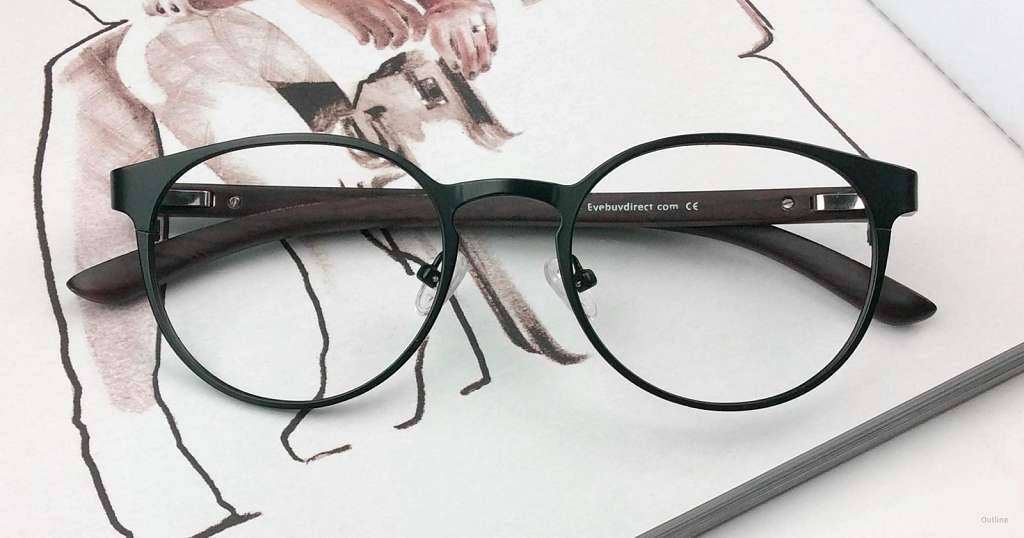
There are two main types of glare reducing lenses for eyewear: lenses with an anti-reflective coating and polarized lenses. Both help to prevent glare in their own way. Glare reducing lenses can improve vision clarity, help people see better while driving at night, reduce annoying glare from water or other horizontal surfaces, and eliminate noticeable reflections on a lens itself.

What is glare?

Glare is caused by light bouncing off of a reflective surface. When talking about eyewear, people are most likely referring to lens glare or environmental glare. Lens glare is caused by the reflection of light off the surface of a lens. Whether it belongs to a camera, telescope, binoculars, or even just glasses, all lenses have some level of reflection with the lowest amount of reflection being less than 0.1%. Eyeglass lenses without a glare-reducing coating typically allow around 90% of light to pass through, depending on the lens material. The other 10% of the light reflects off the surfaces of the lens. The glare caused by this 10% reduces vision clarity, causes people to see halos around headlights and street lamps at night, and creates bright, almost white reflections on the lens itself.

Environmental glare is caused by light waves reflecting off of flat surfaces like water or the highway. It becomes focused and travels in a uniform direction parallel to that surface, creating a bright and intense reflection that we call glare. This type of glare affects everyone, regardless of whether or not they wear glasses.

glare reducing lenses

Outline, in Black

How do glare reducing lenses work?

While it may be impossible to eliminate 100% of the glare on glasses lens, technology has helped to get the number as close to 0 as possible. While both anti-reflective coatings and polarized lenses help to reduce glare, the technology behind these two is quite different. An anti-reflective coating (also known as AR or anti-glare coating) actually encourages more light to pass through a lens. When more light passes through, less light reflected off its surfaces, and thus, less glare.

Polarized lenses, on the other hand, reduce glare by absorbing light waves from a certain orientation. Most polarized lenses for eyewear are oriented to absorb horizontal light waves reflected off of flat surfaces like a lake or the snow-covered ground.

When it comes to eyewear, AR coatings are applied both eyeglass lenses and sunglass lenses. Anti-glare coating is applied to both sides of a lens to prevent light from reflecting off the back of the lens as well. Polarized lenses are typically used for sunglasses since the nature of its glare reducing technology is to block light instead of letting more through.

The benefits of glare reducing lenses

Many people question whether or not it’s worth it to get glare reducing lenses. The short answer is: while not everyone may need sunglasses with polarized lenses, lenses with an anti-reflective coating will vastly improve the quality of life for a glasses wearer.

Lens glare is a major source of eye strain since it reduces vision clarity, forcing your eyes to work harder to focus. People who work with computers are especially susceptible to this type of eye strain since illuminated screens act as a direct and constant source of glare on lenses. Adding AR coating to your lenses significantly lessens this glare, helps you see more clearly, and reduces eye strain caused by computer screens.

Glares called “halos” can be seen around the headlights of cars and street lamps. These halosare a great source of discomfort and distraction for glasses wearers who drive at night. They reduce visibility and make nighttime driving difficult. Anti-glare coating prevents these halos and helps to make driving at night safer for glasses wearers.

If you’re someone who is both literally and figuratively in the spotlight a lot, anti-reflective coating is a must. Glare caused by bright lights reflecting off a lens can be distracting. It also obscures your eyes, making it harder for people to find direct eye contact with you. So if you have a client- or customer-facing job, make sure to consider getting glare reducing glasses.

Finally, if you’re someone who spends a lot of time out on the water or working in the snow, you’re well aware of how much glare can reduce visibility and make it a literal pain to be outside. The tint on sunglasses with polarized lenses helps to reduce that all around brightness, while the polarization helps to save your eyes from blinding glare.

So for the best comfort while wearing glasses or sunglasses, consider glare reducing lenses. Not only will they help you see better, but they’ll also help you get the most out of life. At EyeBuyDirect, you can find affordable glare reducing lenses for any of our great styles.

Coined from eyebuydirect.com

Contact us

Eye clinic locations:

01, Ajuwon junction, Ajuwon bus stop, beside BPNL filling station, Akute/Ajuwon road, off Elliot bus stop, Iju-Ishagah. Tel: 08034971582

222, Iju road, Balogun, Ifako Ijaye, Lagos. Tel: 08107531046

20, Akute/Ajuwon road, Akute, Ifo, Ogun state. Tel: 08068084591.

Let us hear from you. Your message is important to us:

You can also write to us by filling the form at the bottom of this page